Which of the Following Halogens Would Have Stronger Intermolecular Forces
Fluorine reacts violently with. The strengths of the types of bond or force are as follows.

12 6 Types Of Intermolecular Forces Dispersion Dipole Dipole Hydrogen Bonding And Ion Dipole Chemistry Libretexts
Iihalogens to form dihaloalkanes including the use of bromine to detect the presence of a double CC bond as a test for unsaturation in a carbon chain iiihydrogen halides to form haloalkanes steam in the presence of an acid catalyst eg.
. Since ancient times plants have been used for medicinal purposes. The stronger intermolecular attractions as the molecules get bigger means that you have to supply more heat energy to turn them into either a liquid or a gas - and so their melting and boiling points rise. H 3 PO 4 to form alcohols.
Intramolecular forces are stronger than intermolecular forces. For example a hydrogen bond is about one tenth the strength of a covalent bond. The intermolecular attractions between one molecule and its neighbours are van der Waals dispersion forces.
Amongst the straight chain alkanes the first four members C 1- C 4 are gases the next thirteen are liquids C 5 C 17 and the higher. They can react with H 3 O in a dilute acid to form an ammonium salt and this property is used to extract. In the example of NaCl the positively-charged sodium ion is held in close proximity to the negatively-charged chloride ion and the net effect is a molecule that is.
When two atoms in a covalent bond have the same electronegativity the covalent bond is nonpolar. Ionic bond Ionic bonding involves an electron being donated from one atom to another eg. One class of substances called alkaloids found in many of these plants has been isolated and found to contain cyclic molecules with an amine functional groupThese amines are bases.
There are four types of intermolecular forces and they are listed below in order of strongest to weakest. Greater the surface area stronger are the van der Waals forces of attraction. The varying strengths of different types of bonds.

Organic Chemistry Science Educational School Posters Organic Chemistry Chemistry Classroom Teaching Chemistry

Chemical Bonding And Molecular Structure Cbse Notes For Class 11 Chemistry 8 11th Chemistry Chemistry Chemistry Notes

Question 15 5 Points Which Of The Following Halogens Would Have Stronger Intermolecular Forces O A Homeworklib

Weak Intermolecular Van Der Waals Forces Origin Strength Chemistry Jove

Lesson 15 Intermolecular Forces
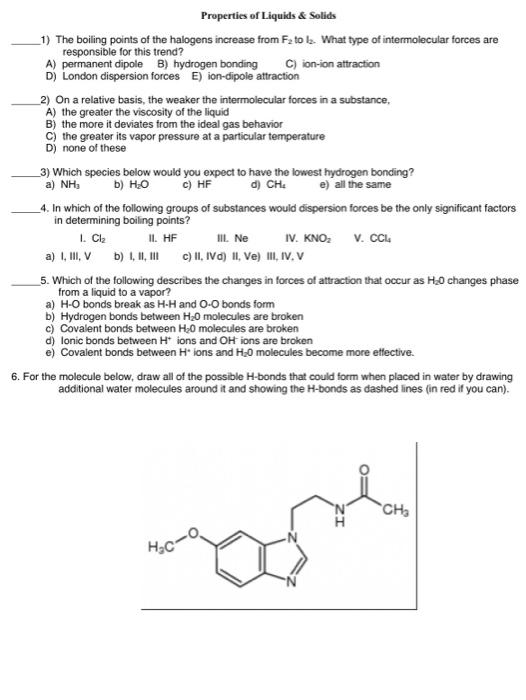
Solved Properties Of Liquids Solids 1 The Boiling Points Chegg Com
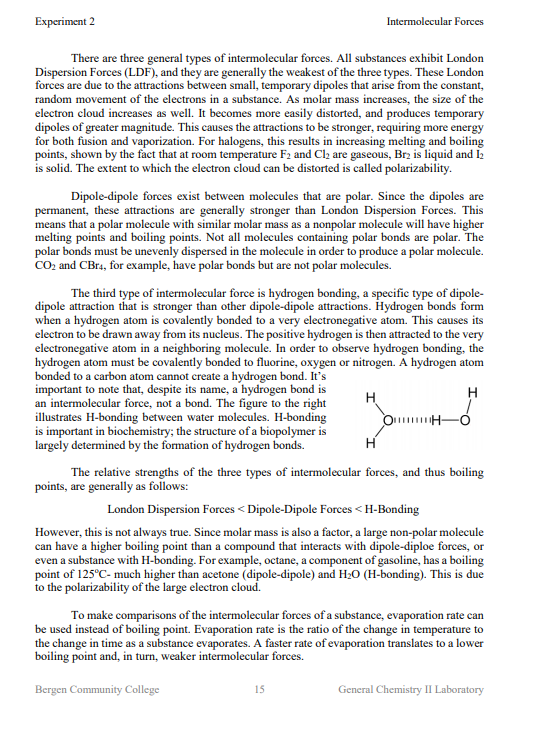
Solved Experiment 2 Intermolecular Forces There Are Three Chegg Com
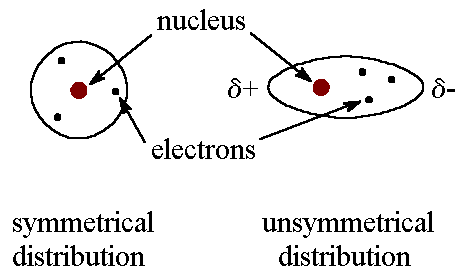
London Dispersion Forces
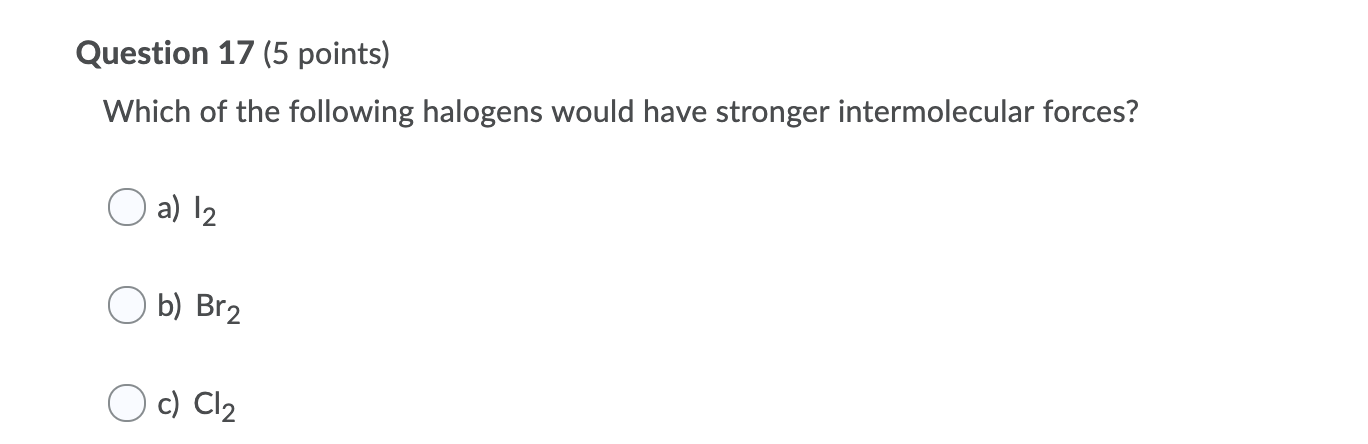
Solved Question 17 5 Points Which Of The Following Chegg Com
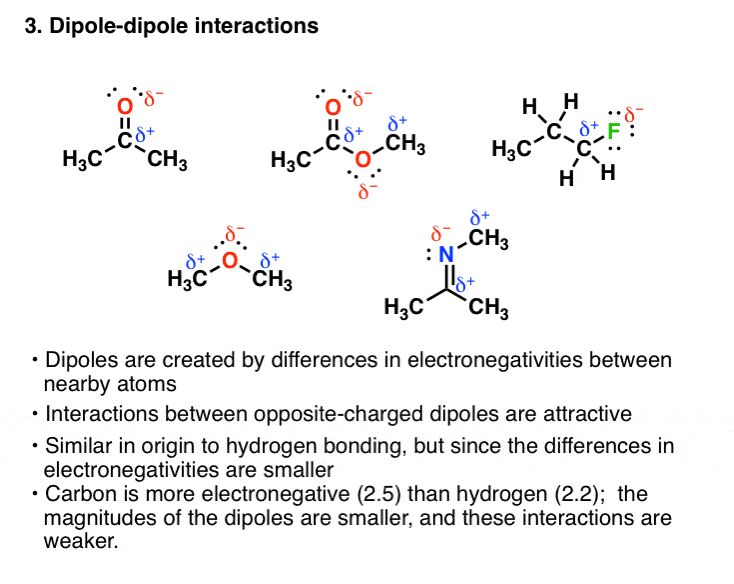
The Four Intermolecular Forces And How They Affect Boiling Points
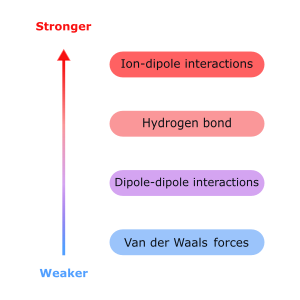
Strength Of Intermolecular Forces Psiberg

Intermolecular Forces In Covalent Molecules
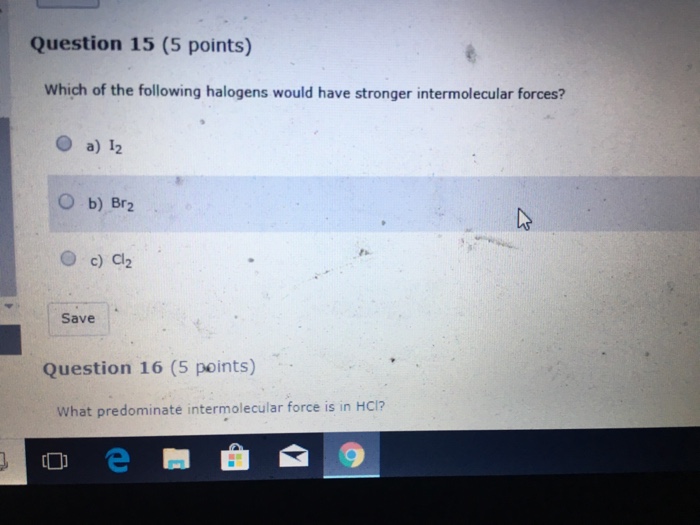
Solved Question 15 5 Points Which Of The Following Chegg Com

Hydrocarbons Class 11 Notes Chemistry Chapter 13 Learn Cbse In 2021 Chemistry 11th Chemistry Covalent Bonding
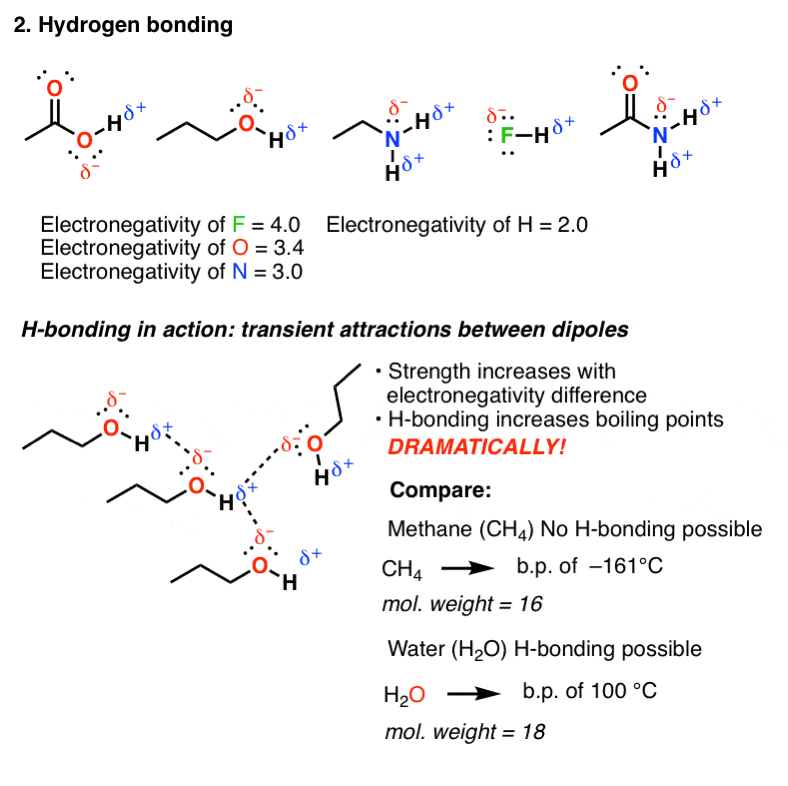
The Four Intermolecular Forces And How They Affect Boiling Points
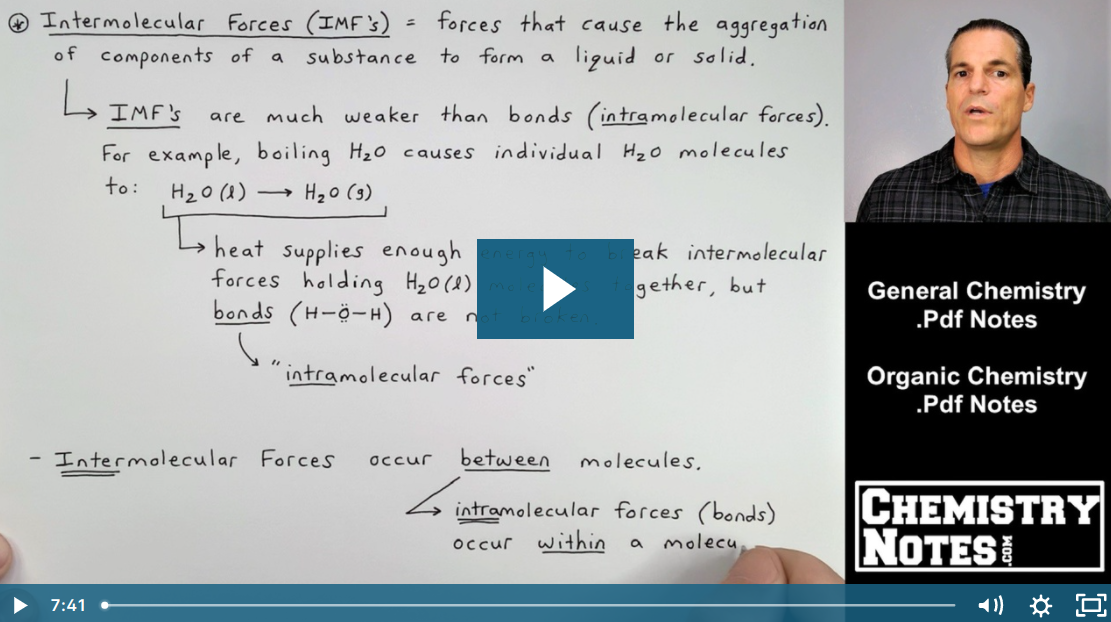
Types Of Intermolecular Forces Strength Of Imf S Medium
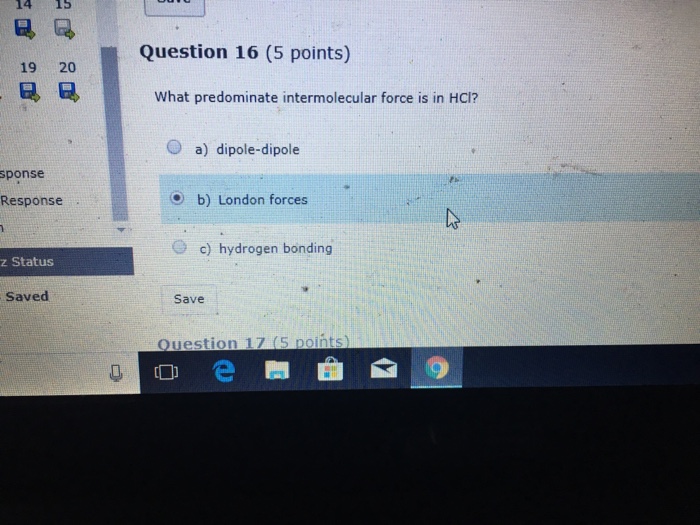
Solved Question 15 5 Points Which Of The Following Chegg Com

What Are Intermolecular Forces Properties Of Matter Chemistry Fuseschool Youtube
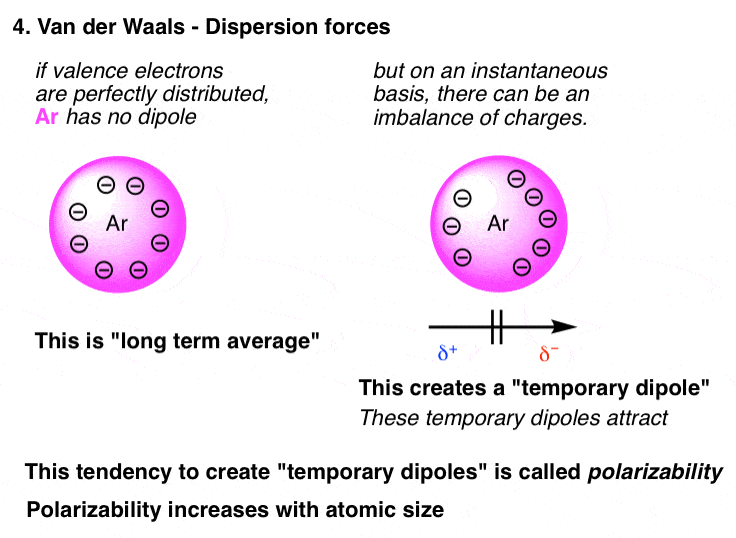
The Four Intermolecular Forces And How They Affect Boiling Points


Comments
Post a Comment